
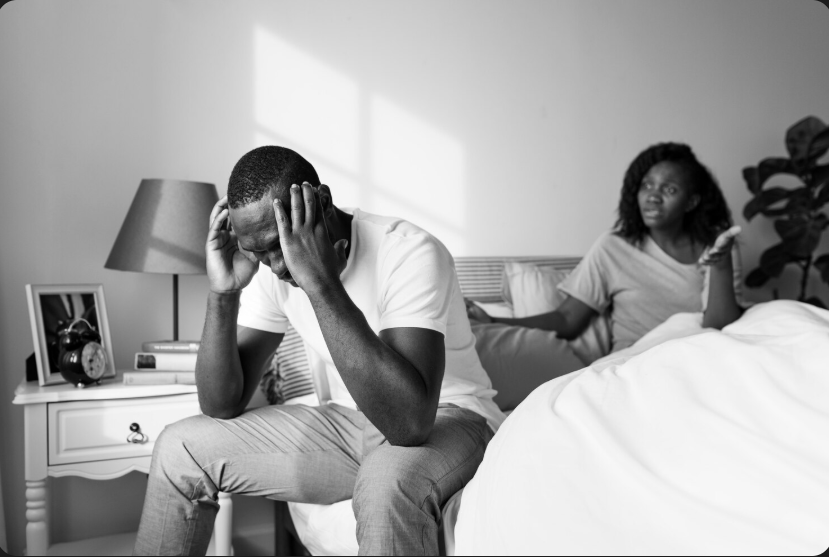
There is a difference between loving someone and genuinely enjoying your connection with them.
A couple can still care deeply about each other while going through a period where conversations feel forced, affection becomes less frequent, and spending time together no longer feels as natural as it once did.
That distinction can be difficult to recognize in a marriage.
Maybe your husband still says he loves you, but something feels different.
He spends more time away from home.
He rarely initiates affection.
He doesn’t seem interested in hearing about your day.
He finds reasons to stay in another room.
And sometimes, you notice that he seems much happier and more energetic around other people than he does around you.
None of these behaviors automatically means your husband no longer likes you.
Stress, work, exhaustion, unresolved resentment, personal struggles, and relationship problems can all affect the way someone behaves at home.
But when several of these changes persist over time, they may be worth paying attention to.
Here are five things a husband may do at home when he feels emotionally disconnected from his wife.
1. He Spends Less and Less Time at Home

One of the first changes you might notice is that your husband seems to find reasons to stay away from home.
Maybe he starts:
- Staying late at work more often
- Spending longer periods with friends
- Taking unnecessary errands
- Sitting in his car before coming inside
- Spending more time on hobbies outside the house
- Going to bed early to avoid conversation
- Staying awake late when everyone else is sleeping
Of course, having a busy schedule doesn’t automatically mean someone dislikes their spouse.
People need time outside their marriage.
Work can become demanding.
Friends and hobbies are healthy parts of life.
The issue is the pattern and the change from what was normal before.
If your husband used to enjoy spending evenings with you but now consistently looks for reasons to be somewhere else, it may be worth asking why.
The better question isn’t:
“Why does he hate being home?”
Try asking:
“What has changed about the way home feels to both of us?”
That opens the door to a more productive conversation.
2. Physical Affection Becomes Much Less Natural

Physical affection can communicate closeness without requiring a single word.
A hug when you come home.
A kiss before bed.
Holding hands.
Sitting close together.
A gentle touch while passing in the kitchen.
When those small gestures gradually disappear, you may begin to feel emotionally rejected.
You might notice that your husband:
- Rarely initiates hugs or kisses
- Pulls away when you reach for him
- Stops sitting close to you
- Avoids cuddling
- Seems uncomfortable with romantic affection
- No longer initiates intimacy
But physical distance has many possible explanations.
Stress, exhaustion, health concerns, unresolved arguments, emotional hurt, or changes in the relationship can all affect affection.
So don’t automatically conclude:
“He doesn’t like me anymore.”
Instead, try:
“I’ve noticed that we’re not as affectionate as we used to be. Is something bothering you?”
That question may reveal a deeper issue that has nothing to do with attraction.
If the physical distance is happening alongside emotional distance, your marriage may need more intentional attention. Femmenext’s guide on How to Bring Back Emotional Connection in Your Marriage offers practical ideas for reconnecting when spouses begin to feel far apart. How to Bring Back Emotional Connection in Your Marriage
3. He Stops Being Curious About Your Life
Friendship is an important part of a long-term marriage.
When spouses are emotionally connected, they usually remain interested in each other’s experiences—even the ordinary ones.
“How was your day?”
“Did your meeting go well?”
“How are you feeling?”
“What happened with that problem you mentioned yesterday?”
These questions may seem small, but they communicate:
“Your life matters to me.”
When that curiosity disappears, you may start feeling like you’re living beside your husband rather than with him.
Perhaps he stops asking about your day.
He doesn’t follow up on things you’ve told him.
He rarely shares what’s happening in his own life.
You might realize that most of your conversations are now about:
- Bills
- Children
- Work
- Groceries
- Household responsibilities
- Appointments
- Schedules
You’re communicating, but you’re not really connecting.
That can be a sign that the friendship inside the marriage needs attention.
And sometimes, the solution isn’t a dramatic romantic gesture.
It begins with becoming curious about each other again.
Ask a question you don’t already know the answer to.
Listen without immediately trying to solve the problem.
Tell your husband something about your own day.
Create opportunities for ordinary conversation.
A marriage can become emotionally distant when both people stop asking:
“What’s happening inside you?”
4. He Finds Reasons to Stay in Another Room
You don’t have to be together every minute of the day.
Healthy couples need personal space.
Your husband may want to watch television alone.
You may want to read in another room.
One person may work from home while the other spends time in the kitchen.
None of that is automatically a problem.
The concern is when separation becomes the default.
For example:
You’re in the living room, and he suddenly finds something to do elsewhere.
You go into the kitchen, and he disappears into another room.
You go to bed, and he consistently stays up for hours.
You try to spend time together, but he repeatedly finds reasons to avoid it.
Over time, this can make a couple feel like roommates.
You’re living under the same roof, but you’re rarely sharing the same emotional space.
If this sounds familiar, don’t immediately accuse your husband of deliberately avoiding you.
Instead, ask yourself:
“When did we stop enjoying being together?”
That question may reveal something important.
Perhaps there is unresolved resentment.
Maybe you’ve stopped having fun together.
Maybe communication has become dominated by criticism.
Maybe one or both of you feel emotionally exhausted.
Or perhaps there is another problem that neither person has been willing to discuss.
The behavior is worth noticing—but understanding the reason behind it is even more important.
5. He Seems Warmer and Happier Around Everyone Else
This can be one of the most painful things to notice.
Your husband may laugh with his friends.
He may become energetic around coworkers.
He may joke with family members.
He may seem relaxed and engaged when he’s around other people.
But when the two of you are alone, his energy changes.
He becomes quiet.
Distant.
Irritable.
Uninterested.
Or emotionally unavailable.
That contrast can make you wonder:
“Why does everyone else get the version of him that I used to have?”
It’s understandable to feel hurt by that.
But even this behavior doesn’t automatically prove that your husband no longer likes you.
People often behave differently in different environments.
A person may be energetic with friends because there are fewer responsibilities.
They may be quieter at home because they’re exhausted.
They may feel comfortable enough with their spouse to stop performing socially.
Or there may genuinely be unresolved problems within the marriage.
The important question is whether the difference has become persistent and painful.
If your husband consistently seems emotionally available to everyone except you, it’s worth having an honest conversation about the relationship.
What These Five Behaviors May Actually Mean
If you’ve noticed several of these behaviors, it’s tempting to jump to one conclusion:
“My husband doesn’t like me anymore.”
But there are many possible explanations.
He could be:
- Stressed about work
- Emotionally exhausted
- Dealing with personal problems
- Experiencing burnout
- Carrying resentment
- Struggling with communication
- Feeling disconnected from the marriage
- Avoiding unresolved conflict
- Going through a difficult life transition
- Experiencing relationship dissatisfaction
And yes, in some circumstances, emotional withdrawal can accompany infidelity or another serious relationship problem.
But behavior alone doesn’t tell you the entire story.
That’s why it’s important to look at the broader pattern instead of interpreting one behavior as a definitive answer.
Is Your Marriage Starting to Feel Like a Roommate Relationship?

One of the clearest signs that a marriage needs attention is when the relationship becomes almost entirely practical.
You share a house.
You divide chores.
You pay bills.
You manage responsibilities.
You may even sleep in the same bed.
But you don’t feel like romantic partners anymore.
There is little affection.
Few meaningful conversations.
Almost no quality time.
And neither person seems particularly interested in changing it.
If this sounds familiar, your marriage may need more intentional care.
Femmenext’s article How to Know When Your Marriage Needs More Attention: 12 Signs explores related signs such as reduced quality time, practical-only conversations, emotional loneliness, disappearing affection, and feeling more like roommates than partners. How to Know When Your Marriage Needs More Attention
What Should You Do If Your Husband Seems Distant?
Don’t immediately start trying to make yourself more attractive, more agreeable, or more entertaining just to get his attention back.
Instead, start with communication.
Choose a calm moment and say something like:
“I’ve noticed that we’ve become more distant lately. We don’t spend as much time together, and I miss feeling close to you. Is something going on?”
Then listen.
Try not to interrupt.
Try not to immediately defend yourself.
Try not to turn the conversation into a list of everything he’s done wrong.
The purpose of the first conversation isn’t necessarily to solve the entire marriage.
It’s to understand what is happening.
Don’t Assume Everything Is Your Fault
When your husband becomes distant, you may immediately start asking:
“What did I do?”
“Am I not attractive enough?”
“Have I become boring?”
“Did I push him away?”
“Is there another woman?”
It’s natural to search for an explanation.
But don’t automatically make yourself responsible for another person’s emotional behavior.
Relationships are created by two people.
If there are problems, both partners have a role in addressing them.
You can acknowledge your own mistakes without taking responsibility for everything that has gone wrong.
And if your husband is unhappy, he has a responsibility to communicate rather than silently withdrawing indefinitely.
Ask What Has Changed
Instead of asking:
“Do you still like me?”
which may produce a simple “yes” or “no,” try asking more specific questions.
“Do you feel happy in our relationship?”
“Do you feel close to me?”
“Is there anything you’ve been holding onto that we haven’t talked about?”
“What do you think has changed between us?”
“What do you need more of from me?”
And perhaps most importantly:
“What do you think we need to work on together?”
These questions can reveal much more than trying to force a confession about whether someone still has feelings.
What If He Admits He Feels Disconnected?
Take his answer seriously.
It doesn’t necessarily mean the marriage is over.
Sometimes people go through periods where they feel disconnected from their spouse.
The next question is whether both partners are willing to work on the relationship.
Ask:
- Does he want to improve the marriage?
- Is he willing to communicate honestly?
- Does he recognize his part in the problem?
- Are you both willing to make changes?
- Can you identify what caused the distance?
- Are there unresolved resentments?
- Can you begin spending meaningful time together again?
If both people are willing, emotional connection can sometimes be rebuilt gradually.
Bring Back the Friendship
Before worrying about grand romantic gestures, think about friendship.
Do you still laugh together?
Do you know what’s happening in each other’s lives?
Do you enjoy doing ordinary things together?
Can you talk without immediately arguing?
Do you feel safe sharing your thoughts?
Do you still have inside jokes?
Do you genuinely enjoy each other’s company?
Long-term romance often becomes easier when the underlying friendship is healthy.
Try starting small.
Have coffee together.
Take a walk.
Cook dinner together.
Watch something funny.
Ask about his day.
Tell him about yours.
Put your phones away for 20 minutes.
The goal isn’t to force intimacy.
It’s to create opportunities for it.
Show Appreciation Without Begging for Attention
If emotional distance has developed, appreciation can help change the atmosphere.
Notice something your husband does well.
Thank him.
Tell him when you appreciate his effort.
Acknowledge something you admire.
But there’s an important distinction:
Appreciation should not become a strategy for earning basic affection.
You shouldn’t have to constantly perform to convince your spouse that you’re worthy of attention.
Healthy connection involves effort from both people.
If you’re interested in practical ways to restore warmth and affection, How to Keep Romance Alive in a Long-Term Relationship: 10 Simple Ways That Actually Work offers additional ideas. How to Keep Romance Alive in a Long-Term Relationship
What If Resentment Is the Real Problem?
Sometimes what looks like dislike is actually unresolved resentment.
Maybe your husband feels unappreciated.
Maybe you feel unsupported.
Maybe one of you believes the other isn’t contributing enough.
Maybe an old argument was never properly resolved.
Maybe there have been repeated disappointments.
When resentment accumulates, affection can become harder.
People stop being curious.
They stop initiating conversations.
They stop wanting to spend time together.
They become emotionally guarded.
If resentment is part of the problem, simply telling each other to “be more romantic” probably won’t solve it.
The underlying hurt needs to be addressed.
Femmenext’s How to Stop Resenting Your Partner: 10 Things That Actually Help explores how unresolved disappointment can affect emotional connection and what couples can do about it. How to Stop Resenting Your Partner
What If He Doesn’t Want to Work on the Marriage?
This can be one of the hardest situations.
You can invite your husband into a conversation.
You can express your needs.
You can suggest counseling.
You can change how you communicate.
But you cannot force another adult to participate in repairing the relationship.
If you are the only person trying indefinitely, you may eventually need to consider what you are willing to accept.
Ask yourself:
“Am I trying to repair a marriage that both of us want, or am I carrying the entire relationship alone?”
That distinction matters.
When Professional Support May Help

If conversations repeatedly turn into arguments, if resentment has become deeply rooted, or if neither of you can understand how to move forward, professional couples counseling may be worth considering.
A qualified therapist can help create a structured environment where both partners can discuss difficult issues without immediately falling into the same patterns.
Seeking help isn’t necessarily an admission that your marriage has failed.
Sometimes it’s simply an acknowledgment that the problem has become difficult to solve without support.
Don’t Try to Become Someone Else to Make Him Like You Again
This deserves special attention.
You may be tempted to change everything about yourself.
Dress differently.
Lose weight.
Stop talking about your needs.
Become more agreeable.
Never complain.
Always be cheerful.
Do everything he wants.
Try to become the “perfect wife.”
But a healthy marriage shouldn’t require you to erase yourself to maintain someone’s affection.
You can work on your communication.
You can become more understanding.
You can acknowledge mistakes.
You can improve the relationship.
But you should still be yourself.
Your goal isn’t to become someone your husband can’t live without.
It’s to create a relationship where both people genuinely want to be present.
Final Thoughts
If your husband seems distant at home, don’t immediately conclude that he no longer likes you.
But don’t ignore persistent changes either.
Spending less time together, avoiding physical affection, losing curiosity about each other’s lives, staying in separate rooms, and seeming more engaged with everyone else can all be signs that something in the relationship needs attention.
The behavior isn’t the final answer.
It’s a reason to start asking better questions.
What changed?
When did the distance begin?
Is there resentment?
Is there unresolved conflict?
Does he still want the relationship?
Do you still enjoy being together?
And are both of you willing to work on the marriage?
You cannot force someone to enjoy your company.
You cannot make another person feel something they don’t feel.
But you can communicate honestly.
You can stop pretending everything is fine.
You can set healthy boundaries.
You can take responsibility for your part without taking responsibility for everything.
And you can decide what kind of marriage you are willing to live in.
A difficult season doesn’t automatically mean your marriage is over.
Sometimes it means your relationship needs attention.
Sometimes it needs honest conversations.
Sometimes it needs professional support.
And sometimes it reveals deeper problems that both partners need to confront.
Whatever the situation, don’t lose yourself trying to make someone choose you.
A healthy marriage should give both people a reason to want to come home—not simply a reason to stay.
Frequently Asked Questions
How can I tell if my husband doesn’t enjoy being around me anymore?
Look for persistent changes rather than one isolated behavior. Consistently avoiding quality time, withdrawing affection, staying in separate rooms, and showing little interest in your life may indicate emotional disconnection, but they don’t prove that your husband no longer likes you.
Why does my husband spend more time away from home?
There can be many explanations, including work, hobbies, friendships, stress, burnout, or relationship problems. If his behavior has changed significantly and he consistently avoids spending time with you, it may be worth having an honest conversation.
Does a lack of physical affection mean my husband doesn’t love me?
Not necessarily. Affection can decrease because of stress, exhaustion, conflict, emotional distance, or other personal circumstances. The best way to understand the change is to talk about it rather than assuming what it means.
Why does my husband seem happier with other people than with me?
People can behave differently in different environments. However, if he consistently seems engaged and warm with others while remaining distant with you, the contrast may indicate that something in the relationship needs attention.
Can a husband love his wife but not enjoy being around her?
Yes. Love, commitment, friendship, attraction, and enjoyment are related but not identical. A couple can remain committed while experiencing a period of emotional disconnection or reduced enjoyment of each other’s company.
Can emotional distance in marriage be repaired?
It can be possible when both partners are willing to communicate honestly, understand what caused the distance, address resentment, and make consistent efforts to reconnect.
What should I do if my husband refuses to talk about our relationship?
Choose a calm moment and explain how his withdrawal affects you without immediately blaming him. If communication remains impossible and both partners are willing, professional support may provide a more structured way to address the problem.
0 Comments