

What Does It Mean When Your Husband Sleeps in Another Room? 9 Possible Reasons
When your husband suddenly starts sleeping in another room, it can leave you with a lot of questions.
You may wonder:
“Is he angry with me?”
“Does he still love me?”
“Is something wrong with our marriage?”
“Could there be someone else?”
Sleeping separately can feel emotionally significant, especially if you and your husband have always shared a bedroom.
But before assuming the worst, it’s important to remember that couples have different sleeping habits and different ideas about personal space. Some couples regularly sleep in separate rooms because of schedules, comfort, snoring, or other practical reasons. In other situations, moving to another room may happen because of conflict or emotional distance.
The meaning depends heavily on why the change happened, whether it’s temporary or ongoing, and what else is happening in your relationship.
Here are nine possible reasons your husband may be sleeping in another room.
1. He Simply Sleeps Better Alone

Sometimes the explanation is much simpler than you expect.
Your husband may sleep better when he has the bed to himself.
Maybe he moves around a lot during the night.
Maybe he prefers a particular sleeping position.
Maybe you have different preferences for the mattress, blankets, room temperature, or amount of space.
None of this necessarily has anything to do with how he feels about you.
Some people genuinely sleep better alone.
If your husband wakes up frequently when sharing a bed but sleeps peacefully in another room, he may simply be prioritizing better sleep.
The important question is whether he is also emotionally distant from you.
If he sleeps separately but remains affectionate, communicative, and interested in spending time together, the sleeping arrangement may simply be a practical choice.
2. Your Sleep Schedules Are Completely Different
Different schedules can make sharing a bedroom difficult.
Perhaps your husband wakes up early for work while you stay up late.
Or maybe you’re a night owl while he prefers to go to bed early.
One person may like watching television before sleeping while the other needs complete silence.
You may have different work schedules or responsibilities that make your sleep patterns incompatible.
In situations like this, sleeping in separate rooms can actually help both partners get adequate rest.
It doesn’t automatically mean there is a problem with the marriage.
Instead of asking:
“Why doesn’t he want to sleep with me?”
consider asking:
“Are our sleep habits making it difficult for either of us to rest?”
That question may lead to a much simpler solution.
3. He Is Dealing With a Sleep Problem
Sleep difficulties can also lead someone to move to another room.
Your husband may be struggling with:
- Loud snoring
- Restlessness
- Insomnia
- Different sleep schedules
- Frequent waking
- Stress-related sleep problems
- Other difficulties that interfere with his rest
The original article also notes that sleep disturbances can affect sleeping arrangements and that either spouse may move rooms to avoid disturbing the other.
If your husband has recently started sleeping separately and also complains about poor sleep, fatigue, or difficulty staying asleep, don’t automatically interpret the situation as a relationship problem.
It may be worth discussing whether he needs to address an underlying sleep issue.
4. He Needs Some Personal Space

Marriage doesn’t mean two people have to be together every minute.
Even in a loving relationship, people sometimes need quiet time alone.
Your husband may use the other bedroom to read, think, relax, meditate, pray, study, or simply enjoy some uninterrupted time before going to sleep.
Personal space can actually be healthy when it doesn’t become a way of completely avoiding your partner.
The key difference is between:
“I need some quiet time.”
and:
“I don’t want anything to do with you.”
Those are very different messages.
If your husband continues communicating with you, spending quality time with you, showing affection, and participating in the relationship, his need for occasional solitude may not be a serious concern.
5. He Is Upset About Something
This possibility becomes more relevant if the move to another room happened immediately after an argument.
Maybe you’ve had a disagreement about money.
Perhaps there is an unresolved issue involving family.
Maybe you’ve been arguing about intimacy.
Or perhaps resentment has been building for a while.
In that situation, sleeping separately may be his way of creating temporary distance while emotions are high.
That doesn’t necessarily mean the marriage is over.
However, if sleeping separately becomes a recurring response to every disagreement, it may indicate that the two of you need a healthier way to handle conflict.
Instead of allowing silence to continue for days, consider asking:
“Are you sleeping separately because you’re still upset with me? I’d rather understand what’s bothering you than guess.”
That opens the door to communication.
6. There May Be Emotional Distance Between You
Sometimes the bedroom isn’t really the problem.
It’s simply where the emotional distance becomes visible.
You may already have noticed that your husband:
- Talks to you less
- Shows less affection
- Avoids quality time
- Seems uninterested in your day
- Doesn’t want to discuss his feelings
- Spends most of his free time elsewhere
- Seems more comfortable around other people
When sleeping separately happens alongside several of these behaviors, it may be worth looking more closely at the overall state of the marriage.
Emotional disconnection rarely begins with one dramatic event.
Sometimes it develops gradually through stress, unresolved arguments, resentment, lack of quality time, or simply becoming too focused on everyday responsibilities.
If this sounds familiar, read How to Bring Back Emotional Connection in Your Marriage for practical ways to start reconnecting.
7. He Is Avoiding Conflict
Some people withdraw when they don’t know how to handle conflict.
Rather than continuing an argument, they may leave the room.
Rather than explaining what they’re feeling, they may become quiet.
Rather than resolving the problem, they may create physical distance.
Sleeping in another room can sometimes be part of that pattern.
Taking a short break from an argument isn’t necessarily unhealthy.
In fact, stepping away to calm down can sometimes prevent a disagreement from becoming worse.
The problem is when the break becomes permanent avoidance.
Healthy conflict resolution eventually requires both people to return to the conversation.
If you and your husband repeatedly avoid difficult topics, the emotional distance can become bigger over time.
8. He Prefers Separate Sleeping Arrangements

It may be difficult to accept if you grew up believing that married couples should always share a bedroom.
But there isn’t one universal sleeping arrangement that works for every couple.
Some spouses sleep together every night.
Others occasionally sleep separately.
Some couples maintain separate bedrooms for years and still have a loving relationship.
Your husband’s preference may come from his upbringing, previous experiences, comfort, or simply personal preference. The original article also notes that some people naturally consider separate bedrooms normal.
So don’t automatically assume:
Separate bedroom = unhappy marriage.
The bigger question is whether the arrangement works for both partners.
If you’re unhappy about it, that matters too.
Your feelings deserve to be part of the conversation.
9. There Could Be Something He Isn’t Telling You
This is the possibility many people immediately worry about.
Could he be hiding something?
Could there be another person?
Could he be avoiding you because he doesn’t want questions about his phone or schedule?
It’s possible for secrecy to exist in a relationship, including around infidelity. But sleeping in another room is not evidence of cheating by itself. The original article makes this important distinction as well.
If you are concerned about infidelity, look at the broader pattern rather than focusing only on the bedroom.
Are there unexplained changes in his schedule?
Has his phone behavior changed dramatically?
Is he suddenly more secretive?
Are his explanations inconsistent?
Has emotional intimacy disappeared?
Are there other significant changes that you cannot explain?
Even then, it’s better to separate what you actually know from what you fear might be happening.
When Should You Be Concerned?
Sleeping separately isn’t necessarily a problem.
But the situation deserves more attention if the change is:
- Sudden and unexplained
- Accompanied by emotional withdrawal
- Combined with a major reduction in affection
- Happening after repeated conflicts
- Part of a broader pattern of avoidance
- Making you feel lonely or rejected
- Accompanied by secrecy or dishonesty
- Continuing without any willingness to discuss it
One behavior rarely tells the whole story.
Patterns tell you much more.
Ask Yourself When the Change Started
One of the most useful questions is:
“When did he start sleeping in another room?”
Think about what was happening around that time.
Did you have a major argument?
Did your work schedules change?
Did you have a new baby?
Did one of you begin snoring?
Did intimacy become difficult?
Did financial stress increase?
Did something happen that affected trust?
Did you stop spending quality time together?
The timing can give you valuable context.
Talk to Your Husband Instead of Guessing
If his sleeping arrangement is bothering you, don’t spend weeks trying to decode it.
Talk to him.
Choose a calm moment—not immediately after an argument and not when either of you is exhausted.
You could say:
“I’ve noticed you’ve been sleeping in the other room more often, and I’ve been wondering if something is wrong between us. Can we talk about it?”
Then listen.
You may discover that he has a practical reason.
You may discover that he is stressed.
You may learn that he is unhappy about something in the relationship.
Or you may discover that he simply sleeps better alone.
You won’t know until you ask.
Don’t Start With an Accusation
If you’re already worried about infidelity, it can be tempting to say:
“You’re sleeping in another room because you’re cheating.”
That approach may immediately turn the conversation into a defensive argument.
Instead, describe what you’ve observed.
Try:
“I’ve noticed that you’ve been sleeping separately more often, and I’m feeling disconnected from you. Is something going on?”
This gives your husband an opportunity to explain.
You can always ask more questions once you understand his initial response.
What If He Says He Needs Space?
Try to understand what “space” means.
Does he need one night to cool down?
Does he need more personal time during the week?
Does he want separate bedrooms permanently?
Is he avoiding conflict?
Or is he emotionally withdrawing from the relationship?
Space isn’t necessarily rejection.
But if you need closeness and he needs distance, the two of you need to find a solution that considers both people’s needs.
A marriage cannot be healthy if one person’s need for space completely eliminates the other person’s need for connection.
What If You’re Starting to Feel Like Roommates?
Separate bedrooms can sometimes contribute to a roommate-style marriage—but they’re rarely the only cause.
You may already have noticed:
- You barely talk about anything personal.
- Most conversations are about responsibilities.
- You rarely go on dates.
- Physical affection has disappeared.
- You spend most evenings doing separate things.
- You no longer discuss your dreams.
- You feel lonely even when you’re together.
If several of these signs are present, your marriage may need more intentional attention.
Femmenext’s How to Know When Your Marriage Needs More Attention: 12 Signs discusses emotional loneliness, lack of quality time, practical-only conversations, reduced affection, and the feeling of becoming more like roommates.
Try Rebuilding Connection Outside the Bedroom
If the problem is emotional distance, simply convincing your husband to sleep in the same room may not solve it.
Start rebuilding the relationship during the day.
Have coffee together.
Take a walk.
Ask about his day.
Eat dinner without your phones.
Watch something together.
Plan a simple date.
Talk about something that has nothing to do with bills or responsibilities.
Small moments can help remind both of you that you’re partners—not just people sharing a house.
Don’t Pressure Him Into Physical Intimacy
If your husband is sleeping separately, you may naturally worry that he no longer finds you attractive.
Try not to turn the situation into pressure for sex or physical affection.
Instead, first understand what’s happening emotionally.
Physical intimacy is much easier to rebuild when both partners feel heard, respected, and emotionally connected.
If you’re struggling with a broader lack of romance, How to Keep Romance Alive in a Long-Term Relationship offers practical ideas for restoring affection and connection in a long-term relationship.
What If There Is Resentment?
Sometimes sleeping separately is only the visible part of a much larger problem.
Your husband may feel resentful about something.
You may feel resentful too.
Perhaps one person feels unappreciated.
Maybe household responsibilities aren’t balanced.
Maybe there are unresolved arguments.
Maybe one partner feels ignored or taken for granted.
Resentment can gradually create emotional walls.
If you think unresolved resentment may be affecting your marriage, read How to Stop Resenting Your Partner: 10 Things That Actually Help.
What If Infidelity Is Confirmed?
If you discover that your husband’s separate sleeping arrangement is connected to an affair, the issue becomes much bigger than where he sleeps.
You’ll need time to process the betrayal and decide what you want.
You may want answers.
You may need space.
You may want to consider counseling.
You may eventually want to explore reconciliation—or decide that you cannot continue the relationship.
If you choose to work on the marriage, rebuilding trust takes more than an apology.
It requires honesty, accountability, consistent behavior, and respect for boundaries over time.
What If He Refuses to Talk About It?
This can be especially frustrating.
You can explain how the situation affects you, but you cannot force another adult to communicate.
Try choosing a calm time and being specific about what you need.
You might say:
“I’m not asking you to sleep in the same room tonight. I just need us to talk honestly about why we’re sleeping separately and what it means for our relationship.”
If he continues refusing every conversation about the marriage, consider whether the lack of communication itself has become part of the problem.
What If Separate Bedrooms Actually Work for Both of You?
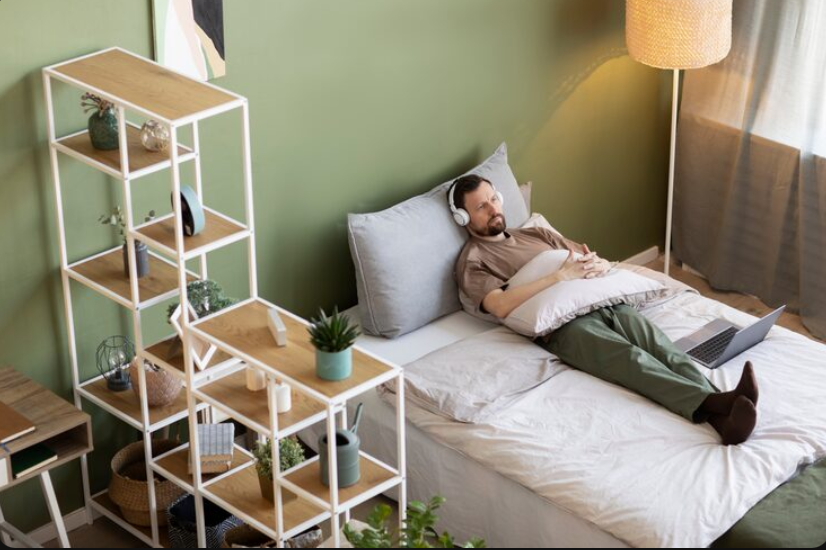
There is nothing inherently wrong with separate sleeping arrangements if both partners are genuinely comfortable with them.
The important questions are:
Are you both happy with the arrangement?
Do you still feel emotionally connected?
Do you still spend quality time together?
Is affection still present?
Can you communicate openly?
If the answers are yes, separate bedrooms may simply be part of how your marriage works.
The goal isn’t to follow someone else’s definition of what marriage should look like.
The goal is to create a relationship that works for both of you.
Final Thoughts
When your husband sleeps in another room, it can be easy to assume the worst.
But separate sleeping can mean many different things.
He may sleep better alone.
You may have different schedules.
He may need personal space.
There could be unresolved conflict.
He may be dealing with sleep problems.
Or there may be deeper emotional distance that needs to be addressed.
And while secrecy or infidelity can sometimes exist in a marriage, sleeping in another room alone isn’t enough evidence to reach that conclusion.
Instead of spending endless nights wondering what it means, have a conversation.
Ask him why.
Tell him how the change makes you feel.
Listen to his answer.
Then look at the larger pattern of your marriage.
Are you still affectionate?
Do you spend time together?
Do you talk?
Do you laugh?
Do you feel emotionally safe?
Do you both want the relationship to be healthy?
Those questions will tell you far more about your marriage than a bedroom ever could.
Sometimes the separate room is simply a comfortable place to sleep.
Sometimes it’s a temporary response to stress.
And sometimes it’s a sign that two people have become emotionally distant and need to start talking again.
The important thing isn’t simply where your husband sleeps tonight. It’s whether the two of you still know how to find your way back to each other.
Frequently Asked Questions
Does my husband sleeping in another room mean he doesn’t love me?
Not necessarily. Separate sleeping can happen because of sleep problems, different schedules, personal preference, comfort, stress, or relationship difficulties. The larger pattern of your marriage matters more than the sleeping arrangement alone.
Why would a husband suddenly sleep in another room?
A sudden change can have many explanations, including an argument, stress, disrupted sleep, different schedules, a need for personal space, or emotional distance. The best way to understand the reason is to ask him directly.
Should I be worried if my husband sleeps in another room?
It depends on the circumstances. If the arrangement is new, unexplained, and accompanied by emotional withdrawal, secrecy, or reduced affection, it may be worth having an honest conversation.
Does sleeping in separate rooms hurt a marriage?
Not necessarily. Some couples sleep separately and maintain strong emotional and romantic connections. Problems are more likely when separate sleeping becomes part of a broader pattern of avoidance, resentment, or emotional disconnection.
Could my husband sleeping separately mean he is cheating?
It is possible for infidelity to involve secrecy and changes in behavior, but sleeping in another room is not proof of cheating. Look at the overall pattern and communicate directly rather than making an accusation based on one behavior.
How do I ask my husband why he sleeps in another room?
Choose a calm moment and avoid accusations. You could say, “I’ve noticed you’ve been sleeping in the other room lately, and I’m wondering if something is bothering you. Can we talk about it?”
Can a marriage recover if spouses have become emotionally distant?
Yes, emotional distance doesn’t automatically mean a marriage is over. When both partners are willing to communicate, address underlying problems, and intentionally reconnect, the relationship may become closer again.
Should I sleep in another room too?
There’s no universal answer. If you need space or are uncomfortable, you can discuss temporary separate sleeping arrangements. But don’t use another bedroom as a way to punish your spouse or avoid an important conversation.
0 Comments