

Being a woman can sometimes feel like trying to meet a list of expectations that never seems to end.
You are expected to look good, succeed professionally, maintain relationships, take care of yourself and others, be confident without appearing intimidating, and somehow have everything figured out.
With so many expectations coming from society, social media, relationships, and even our own minds, it is easy to start questioning whether we are doing enough.
The problem is that low self-esteem rarely appears overnight.
Sometimes, it develops quietly through small habits that seem harmless at first. Over time, however, those habits can change the way you see yourself and make you doubt your value.
Here are five quiet habits that can gradually destroy your self-esteem as a woman—and what you can do instead.
1. Constantly Comparing Yourself to Other Women

Comparison can make you feel like your own life is never enough.
You see another woman’s career, relationship, appearance, home, lifestyle, or accomplishments and immediately start measuring yourself against her.
Social media makes this even easier.
Within a few minutes, you can see someone traveling the world, getting married, launching a business, buying a home, becoming a mother, achieving a fitness goal, or reaching a career milestone.
The problem is that you are comparing your entire life to carefully selected moments from someone else’s life.
You may know what she posts, but you do not know everything she is experiencing privately.
There will always be someone who is wealthier, younger, more successful, more fashionable, more confident, or further ahead in a particular area.
That does not mean you are failing.
Instead of asking, “Why don’t I have what she has?”, try asking:
“What can I learn from her without making her success a judgment of my own life?”
You can admire another woman without becoming insecure about yourself.
Your journey has its own timeline.
If you are working on becoming more confident and comfortable with yourself, you may also enjoy How to Recognize an Authentic Woman: 5 Powerful Signs.
2. Allowing Social Media to Decide How You Feel About Yourself

Social media can be entertaining, educational, and useful. It can help people connect, build businesses, discover opportunities, and share their experiences.
But it can also become damaging when your self-worth starts depending on online reactions.
Maybe you post a picture and receive hundreds of likes.
You feel attractive and confident.
Then you post something else and receive very little engagement.
Suddenly, you start questioning yourself.
Did I look bad?
Did people stop liking me?
Was my picture not good enough?
Why did nobody comment?
This is when a harmless platform can begin influencing your self-esteem.
Your appearance, personality, or value cannot be measured by likes, comments, views, or followers.
Social media shows you what people choose to share. It does not show the complete reality of their lives.
Use social media to connect, learn, laugh, promote your work, and discover inspiration—but do not allow an algorithm to determine how you feel about yourself.
If you notice that certain online habits leave you feeling inadequate, consider taking regular breaks and becoming more intentional about the accounts you follow.
3. Constantly Talking Yourself Down
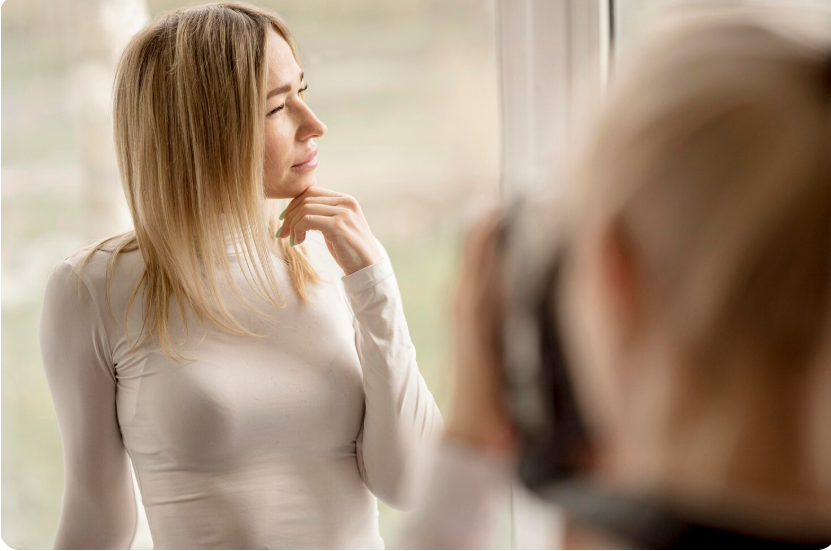
One of the most damaging habits can be the way you speak to yourself when nobody else is listening.
You look in the mirror and immediately focus on what you dislike.
Someone compliments you and you reject it.
Someone tells you that you did a great job and you immediately explain why it was not really that impressive.
You make a mistake and call yourself stupid.
You gain weight and tell yourself that you look terrible.
You make a small mistake at work and convince yourself that you are not capable.
This kind of negative self-talk may seem insignificant, but repeated criticism can gradually influence the way you see yourself.
There is a difference between self-awareness and self-rejection.
You can recognize an area you want to improve without insulting yourself.
Instead of:
“I’m terrible at this.”
Try:
“I’m still learning how to do this better.”
Instead of:
“I look awful.”
Try:
“There are things about my appearance I want to work on, but I don’t have to hate myself in the process.”
You do not need to believe that you are perfect.
You simply need to stop treating yourself like an enemy.
For more insight into behaviors that can quietly affect your confidence, read How to Become a High-Value Woman.
4. Letting Your Past Mistakes Define You

Everyone has a past.
Everyone has made mistakes.
Some people simply become better at hiding theirs.
Maybe you made a poor relationship decision.
Maybe you trusted the wrong person.
Maybe you made a financial mistake.
Maybe you missed an important opportunity.
Maybe you behaved in a way you now regret.
Your past can teach you valuable lessons, but it should not become a permanent definition of who you are.
There is a major difference between saying:
“I made a mistake.”
and saying:
“I am a failure.”
The first statement describes something that happened.
The second turns a moment into an identity.
You are allowed to grow beyond the person you used to be.
You can acknowledge your mistakes, apologize when necessary, learn from them, and make better decisions without spending the rest of your life punishing yourself.
Your past may be part of your story, but it does not have to control the rest of it.
5. Staying Around People Who Constantly Reduce Your Self-Worth
The people around you can influence how you see yourself.
A supportive friend can encourage you to believe in yourself.
A healthy relationship can make you feel respected and valued.
A positive workplace can help you develop your abilities.
But the opposite can also happen.
Constant criticism, manipulation, insults, jealousy, belittling, and disrespect can gradually affect your confidence.
And it does not have to come from a romantic partner.
It can come from:
- A friend
- A family member
- A coworker
- A manager
- A romantic partner
- A social group
- Someone you regularly spend time with
Sometimes, people become so accustomed to being criticized that they eventually begin criticizing themselves.
You may start making yourself smaller to avoid upsetting someone.
You may stop expressing your opinions.
You may hide your achievements.
You may avoid setting boundaries because you are afraid of losing someone’s approval.
That is not a healthy way to live.
You deserve relationships where you can grow without constantly feeling that you have to make yourself smaller.
Surround yourself with people who can correct you without humiliating you, challenge you without destroying your confidence, and celebrate your growth without competing with you.
How to Protect Your Self-Esteem Every Day
Building healthy self-esteem is not something you accomplish once and never have to think about again.
Your confidence can be affected by your thoughts, relationships, environment, social media habits, and experiences.
That is why protecting your self-esteem requires daily awareness.
Start by asking yourself:
- Am I constantly comparing myself to other people?
- Do I depend on social media approval to feel attractive or successful?
- How do I speak to myself when I make mistakes?
- Am I allowing my past to control my present?
- Which people make me feel confident, and which ones consistently make me feel small?
- Am I respecting my own boundaries?
- What qualities do I appreciate about myself?
You do not need to become a completely different person.
Sometimes, improving your self-esteem begins with stopping the habits that teach you to dislike yourself.
Final Thoughts
Your self-esteem can be affected by things that happen quietly every day.
Comparing yourself to other women, relying on social media approval, criticizing yourself, living in the shadow of past mistakes, and remaining around people who constantly undermine you can gradually weaken your confidence.
But these patterns can change.
Start paying attention to the way you speak to yourself, the people you allow close to you, the content you consume, and the standards you use to measure your life.
You do not have to be perfect to be worthy.
You do not have to outperform another woman to have value.
And you do not need everyone else’s approval before you are allowed to feel confident.
Your worth is not something you have to earn every day. Learn to recognize it, protect it, and build your life from it.
0 Comments