
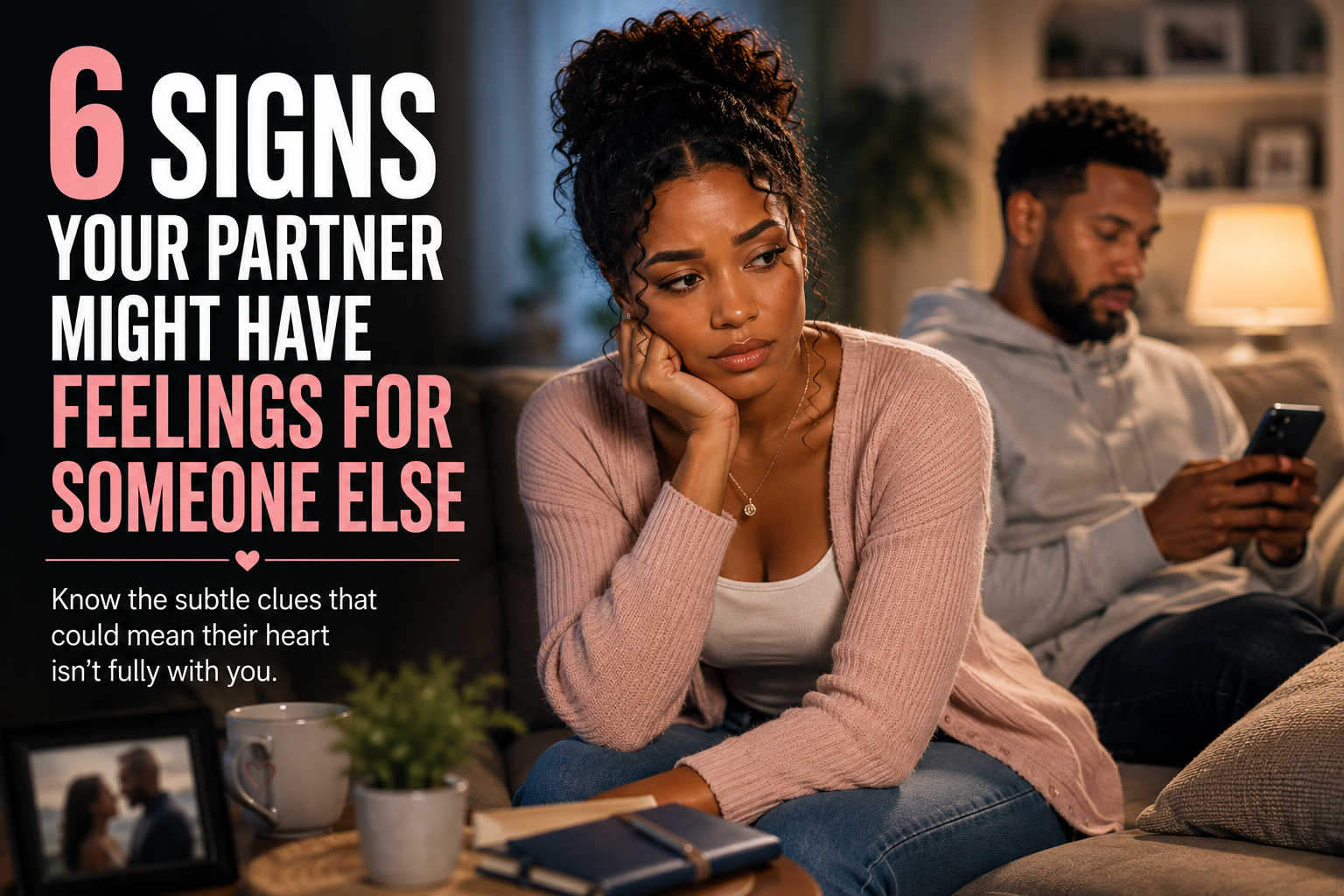
Relationships naturally change over time. People become busy, routines develop, and the intensity of the early stages of love may settle into something more comfortable.
But sometimes, a change in your partner’s behavior can leave you wondering whether something deeper is happening.
Maybe your partner suddenly seems emotionally distant. Perhaps they’re spending more time talking to someone else, protecting their phone, or becoming less interested in sharing everyday details with you.
None of these behaviors automatically proves that your partner has feelings for another person. There can be many explanations for changes in behavior, including stress, work pressure, personal problems, or emotional exhaustion.
However, when several changes happen together and continue over time, it may be worth having an honest conversation.
If you’ve been asking yourself, “Does my partner have feelings for someone else?”, these signs can help you understand what may be happening without immediately jumping to conclusions.
Why Emotional Changes Matter in a Relationship
Physical cheating isn’t the only way a relationship can be affected by another person.
Sometimes emotional attachment develops first.
Your partner may begin sharing personal thoughts with someone else, seeking their attention, looking forward to talking to them, or turning to them for emotional support instead of coming to you.
This doesn’t necessarily mean they’ve fallen in love with that person.
However, emotional intimacy requires attention. When one partner begins consistently investing emotional energy outside the relationship, the other partner may start feeling neglected or pushed aside.
That’s why it’s important to pay attention not only to what your partner does, but also to how the relationship between you has changed.
1. Your Partner Becomes Emotionally Distant
One of the most noticeable signs can be emotional distance.
Your partner may still be physically present, but conversations feel different.
They may stop asking about your day, become less interested in your thoughts, or respond with short answers when you try to connect.
You might also notice that conversations that once felt natural now feel forced.
For example, you may find yourself asking:
“What’s wrong?”
and repeatedly hearing:
“Nothing.”
Occasional emotional distance is normal. Everyone has difficult days.
The concern is when the distance becomes a consistent pattern and your partner seems emotionally engaged elsewhere but unavailable to you.
What You Can Do
Instead of immediately accusing your partner of having feelings for someone else, start with what you have actually observed.
Try:
“I’ve noticed that we’ve been feeling more distant lately, and I miss feeling close to you. Is something going on?”
This creates an opportunity for honest communication without beginning with an accusation.
2. They Suddenly Become Very Protective of Their Phone

Phones are naturally private. Having a password or wanting personal space doesn’t automatically indicate infidelity.
However, a sudden and significant change in phone behavior can sometimes be worth noticing.
Perhaps your partner previously left their phone on the table but now keeps it with them constantly.
Maybe they suddenly turn their screen away when you’re nearby, become nervous when notifications appear, or delete conversations more frequently than before.
Again, one behavior isn’t proof of anything.
The bigger issue is a pattern of secrecy combined with other emotional changes.
If your partner becomes unusually defensive whenever you ask a simple question, it may be worth discussing the change in trust between you.
Healthy relationships allow partners to have privacy without creating an atmosphere of constant secrecy.
3. They Talk About Someone Else More Than Before
Another possible sign is an unusual increase in conversations about one particular person.
Your partner may frequently mention a coworker, friend, neighbor, or acquaintance.
At first, this may seem completely harmless.
And it may be.
People naturally talk about the people they interact with regularly.
The concern comes when the person seems to occupy an unusually large amount of your partner’s attention.
For example, your partner may:
- Frequently bring up the person’s name
- Share stories about them repeatedly
- Compare you to them
- Seem unusually excited about seeing them
- Defend them when you express discomfort
- Remember small details about them
- Become emotionally invested in their problems
None of these behaviors alone proves romantic feelings.
But together, they may indicate that this person has become emotionally significant to your partner.
4. They Stop Sharing Their Inner World With You
Emotional intimacy isn’t only about spending time together.
It’s about feeling like your partner is allowing you into their thoughts, dreams, fears, frustrations, and everyday experiences.
If your partner once told you everything but now shares those things primarily with someone else, you may begin to feel excluded from their emotional life.
Perhaps they tell another person about their work problems before telling you.
Maybe they discuss their frustrations, goals, or personal struggles with someone else while giving you very little information.
This can create a painful feeling of emotional replacement.
Ask Yourself:
“When something important happens in my partner’s life, am I still one of the first people they want to tell?”
If the answer has changed dramatically, it’s worth having a conversation.
5. They Seem Less Interested in Your Relationship
Another possible warning sign is a noticeable decrease in relationship effort.
Your partner may stop initiating dates, affection, conversations, or plans for the future.
Things that once mattered to both of you may suddenly seem unimportant to them.
Maybe you are always the person planning date nights.
Maybe you’re the one initiating conversations.
Maybe your partner no longer seems interested in discussing your future together.
A temporary decrease in effort can happen during stressful periods.
But when someone consistently withdraws from the relationship while becoming more emotionally invested elsewhere, the change deserves attention.
A healthy relationship requires effort from both people.
6. They Become Defensive When You Ask About the Relationship
Communication can become difficult when someone feels accused.
However, there is a difference between being uncomfortable during a difficult conversation and consistently refusing to discuss legitimate concerns.
If you calmly express that you feel disconnected and your partner immediately becomes hostile, dismissive, or turns every concern back on you, you may need to look more closely at the communication pattern.
For example:
You: “I’ve been feeling like we’re not as close as we used to be.”
Healthy response: “I didn’t realize you were feeling that way. Let’s talk about it.”
Concerning response: “You’re just being paranoid. Everything is always a problem with you.”
The second response doesn’t necessarily prove that another person is involved.
But it does indicate that the relationship may have a communication problem that needs attention.
Not Every Change Means Your Partner Has Feelings for Someone Else
This is one of the most important things to remember.
A single sign should never be treated as definitive proof.
Your partner may be emotionally distant because they’re overwhelmed.
They may use their phone more because of work.
They may talk about a coworker because they spend eight hours a day together.
They may have less interest in intimacy because they’re stressed, exhausted, or dealing with personal challenges.
Jumping immediately to the conclusion that someone else is involved can create unnecessary conflict.
Instead, look for patterns, consistency, and context.
Ask yourself:
- Has this behavior changed recently?
- How long has the change lasted?
- Are several signs happening at the same time?
- Have I asked my partner about it?
- Is there another reasonable explanation?
- How does my partner respond when I express my concerns?
These questions can help you separate anxiety from evidence.
What Should You Do If You Suspect Your Partner Has Feelings for Someone Else?
Discovering that something feels different in your relationship can be painful.
Your first instinct may be to investigate everything your partner does.
You may want to check their phone, monitor their social media, or confront the other person.
Before doing that, take a moment.
The most productive first step is usually a calm conversation.
Choose a time when neither of you is angry or rushing somewhere.
Explain what you’ve noticed without presenting assumptions as facts.
For example:
“I’ve noticed that you’ve become more distant lately, and I’ve been feeling like someone else is getting the emotional connection we used to have. I don’t want to accuse you of something I don’t know to be true, but I want us to talk honestly about what’shappening.”
This gives your partner an opportunity to explain.
More importantly, it allows you to focus on the state of your relationship, rather than simply trying to identify another person.
Don’t Ignore Your Feelings
While you shouldn’t automatically assume the worst, you also shouldn’t dismiss your feelings.
If something has consistently felt wrong for weeks or months, it’s worth exploring.
You don’t need proof of cheating to acknowledge that you feel lonely in your relationship.
You don’t need evidence of another person to say:
“I don’t feel emotionally connected to you anymore.”
Your feelings are important.
The goal isn’t to become suspicious of everything your partner does.
The goal is to understand what’s happening between the two of you.
How to Rebuild Emotional Connection
If your partner confirms that there isn’t another romantic relationship and both of you want to improve the relationship, rebuilding emotional closeness can start with small actions.
Try creating regular time for uninterrupted conversations.
Put your phones away during meals.
Ask questions that go beyond household responsibilities.
Talk about your dreams again.
Plan dates.
Show affection.
Express appreciation.
And most importantly, make your partner feel heard.
Emotional connection isn’t rebuilt through one dramatic conversation.
It’s usually rebuilt through repeated moments of attention, honesty, and affection.
Bringing back emotional connection in a marriage/relationship.
What If There Really Is Someone Else?
If your partner admits that they have developed feelings for another person, don’t feel pressured to make an immediate decision about the future.
You may need time to process what you’ve learned.
Ask important questions:
- How long have these feelings existed?
- Has anything physical happened?
- Is your partner willing to end the outside relationship?
- Are they willing to be honest?
- Do they want to rebuild your relationship?
- Are both of you willing to work on the underlying problems?
The answers can help you understand what you’re actually dealing with.
Remember that having feelings for someone else and acting on those feelings are not necessarily the same thing.
However, emotional involvement can still damage trust when it is hidden from a partner.
Can a Relationship Survive If Your Partner Has Feelings for Someone Else?
Yes, some relationships can recover from emotional disconnection or even infidelity, but recovery usually requires honesty and genuine effort from both partners.
The partner who became emotionally involved with someone else needs to take responsibility for their choices.
The other partner may need time to process hurt, anger, insecurity, or betrayal.
Trust cannot be rebuilt simply by saying:
“I’m sorry.”
It requires consistent behavior over time.
If you’re dealing with betrayal, you may also find it helpful to read How to Rebuild Trust After Cheating: 9 Things That Actually Help
Questions to Ask Yourself Before Confronting Your Partner
Before starting the conversation, write down what you’ve actually observed.
Separate facts from assumptions.
For example:
Fact: “You’ve been texting this person every evening.”
Assumption: “You’re in love with this person.”
Starting with facts makes the conversation more productive.
You can also ask yourself:
Am I afraid of losing my relationship, or have I noticed genuine changes in my partner’s behavior?
Have I communicated my concerns clearly?
Have I given my partner an opportunity to explain?
What do I need from this relationship to feel secure again?
These questions can help you approach the situation with greater clarity.
Final Thoughts: Pay Attention Without Jumping to Conclusions
Noticing changes in your partner can be unsettling, especially when you suspect another person may be involved.
But remember that one sign doesn’t tell the whole story.
Your partner becoming quieter, using their phone more, talking about a coworker, or wanting more personal space doesn’t automatically mean they’re developing romantic feelings for someone else.
Look at the bigger picture.
Pay attention to patterns.
Communicate honestly.
And trust yourself enough to acknowledge when something in the relationship doesn’t feel right.
The goal isn’t to become a detective.
It’s to understand whether the emotional connection, trust, and commitment between you and your partner are still being nurtured.
If both of you are willing to be honest and make an effort, even difficult conversations can become the beginning of a stronger relationship.
And if the relationship has reached a point where trust has been seriously damaged, remember that you don’t have to make every decision overnight.
You deserve honesty, respect, emotional security, and a relationship where you don’t have to constantly wonder where you stand.
0 Comments