

Marriage doesn’t always become unhappy because of one dramatic event.
Sometimes the distance develops slowly.
A husband who once wanted to spend every evening with his wife may gradually start spending more time on his phone, at work, with friends, or by himself.
At first, these changes may seem harmless.
Everyone needs personal space. Everyone gets busy. Everyone has hobbies and responsibilities outside the marriage.
But what happens when those activities become a consistent way of avoiding connection at home?
That is when it may be worth taking a closer look.
If your husband seems to spend more and more of his free time away from the relationship, it doesn’t automatically mean he is unhappy with you or that the marriage is failing. Stress, burnout, work pressure, personal struggles, and other issues can create similar patterns.
The important thing is to look for changes, patterns, and the overall state of your relationship.
Here are six things a husband may spend more time on when he is experiencing unhappiness or emotional distance in his marriage.
1. He Spends More Time on His Phone
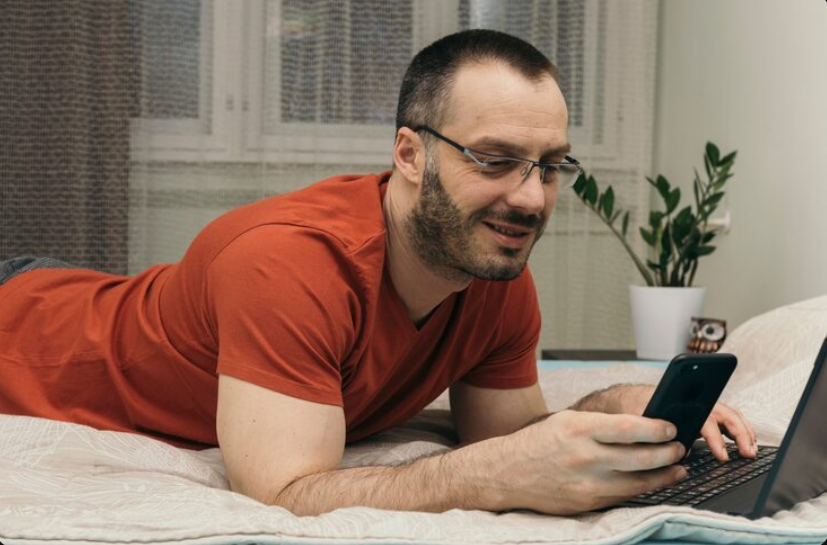
Phones are part of everyday life.
People scroll through social media, answer messages, watch videos, read the news, play games, and communicate with friends.
So simply spending a lot of time on a phone doesn’t mean someone is unhappy in their marriage.
The bigger question is:
What is the phone replacing?
If your husband regularly chooses his phone over conversation, affection, meals together, or quality time, you may begin to feel like you’re competing with a screen.
You might notice that he:
- Scrolls during almost every conversation
- Uses his phone whenever you’re together
- Stays on his phone late into the night
- Seems more engaged with online conversations than with you
- Becomes irritated when you ask for his attention
- Uses screen time to avoid difficult conversations
Sometimes the phone becomes a form of escape.
Instead of dealing with uncomfortable feelings or relationship problems, someone can disappear into endless scrolling.
But don’t automatically assume that is what is happening.
Your husband could simply be stressed, tired, or caught in an unhealthy screen habit.
What matters is whether the behavior is interfering with your connection.
If you feel like you’ve become more like roommates than partners, emotional connection may be the deeper issue. Femmenext’s guide How to Bring Back Emotional Connection in Your Marriage explores practical ways couples can reconnect.
2. Work Becomes His Main Focus
Working hard isn’t a sign that someone is unhappy.
Many people take pride in their careers and genuinely enjoy what they do.
The concern is when work suddenly becomes the answer to everything.
He works late.
He checks emails during dinner.
He takes calls after everyone has gone to bed.
He fills weekends with work.
And whenever you ask for more time together, the answer is:
“I’m busy.”
Work can sometimes provide structure, achievement, recognition, and a sense of control.
Marriage can be much more complicated.
At work, completing a task may produce a clear result.
Relationships aren’t always that predictable.
You can make an effort and still have disagreements.
You can try to communicate and still feel misunderstood.
So when someone is struggling emotionally at home, throwing themselves into work can become an easy way to stay occupied.
But again, context matters.
Your husband may genuinely have a demanding job.
The question is whether work has suddenly become a consistent reason to avoid the relationship.
Ask yourself:
- Has his work schedule changed recently?
- Does he still make time for you?
- Does he participate in family responsibilities?
- Can he disconnect from work when you’re together?
- Is he using work to avoid conversations about the marriage?
A busy season at work is different from consistently choosing work over the relationship.
3. He Spends More Emotional Energy With Friends

Friendships are healthy.
Your husband should be able to spend time with friends, laugh with them, talk about life, and enjoy interests outside the marriage.
Having close friendships doesn’t mean there is something wrong with your relationship.
But you may want to pay attention if his friends seem to receive the emotional connection that is disappearing from your marriage.
For example, perhaps he:
- Talks openly with his friends but rarely with you
- Shares his problems with everyone except you
- Looks happier and more relaxed when he’s with them
- Makes regular plans with friends but rarely plans time with you
- Turns to friends for emotional support whenever something goes wrong
- Seems irritated when you ask for similar attention
The issue isn’t that he has friends.
The issue is whether the marriage has stopped being a place where both partners feel emotionally connected.
A healthy marriage can include strong friendships outside the relationship.
In fact, having separate friendships can be good for both partners.
But spouses also need opportunities to laugh, talk, share experiences, and support each other.
If you’re trying to understand whether your marriage still has a strong foundation, you may find 15 Signs Your Marriage Is Stronger Than You Think helpful.
4. He Wants to Be Alone More Often
Everyone needs alone time.
Some people need more of it than others.
Wanting to read alone, go for a drive, exercise, play games, or simply sit quietly after a long day is perfectly normal.
The concern is when alone time becomes constant withdrawal.
Perhaps your husband spends every evening in another room.
Maybe he regularly stays out longer than necessary.
Maybe he prefers being alone to almost any activity with you.
Or perhaps he becomes noticeably more relaxed when you’re not around.
This can sometimes be a sign of emotional exhaustion or marital unhappiness.
But it can also be related to stress, burnout, anxiety, depression, or simply needing more personal space.
That’s why it’s important not to diagnose the reason yourself.
Instead, pay attention to the pattern.
Ask:
“Is he using alone time to recharge, or does he seem to be using it to escape the relationship?”
There is a meaningful difference.
Healthy alone time usually allows someone to return to the relationship feeling refreshed.
Persistent withdrawal can create even more emotional distance.
5. Drinking or Other Escapes Become a Regular Habit
A drink after work doesn’t automatically indicate marital unhappiness.
Many adults occasionally drink socially or use a familiar routine to unwind.
The concern is when a coping habit becomes increasingly necessary.
For example, you might notice that your husband:
- Drinks much more frequently than before
- Needs alcohol to relax
- Drinks alone more often
- Uses alcohol to avoid thinking or talking about problems
- Becomes irritable when he can’t drink
- Spends money on alcohol that creates financial problems
- Becomes less available emotionally after drinking
At that point, the issue may be bigger than the marriage.
Alcohol misuse can affect communication, intimacy, finances, parenting, health, and trust.
And the underlying cause may not necessarily be marital unhappiness.
Stress, anxiety, depression, trauma, and other personal struggles can also contribute to unhealthy coping habits.
So instead of saying:
“He’s drinking because he’s unhappy with me.”
consider asking:
“Something seems to be changing. What is he struggling with, and is he willing to get help?”
If alcohol use is creating safety concerns, aggression, impaired driving, or other serious problems, prioritize safety and professional support rather than trying to solve everything through a relationship conversation.
6. He Has Time for Everyone’s Problems Except Yours
This can be especially painful.
Your husband may be willing to spend an hour helping a friend with a problem.
He may patiently listen to a coworker’s concerns.
He may help a family member through a difficult situation.
But when you try to discuss something important, suddenly he’s too tired.
“Can we talk about this later?”
And later never seems to come.
The problem isn’t necessarily that he doesn’t care.
He may simply feel overwhelmed by the problems inside the marriage and find it easier to help people whose situations don’t directly involve him.
Helping someone else can feel manageable.
Working through marital conflict requires vulnerability, accountability, patience, and emotional energy.
Still, a marriage can’t remain healthy if one partner repeatedly refuses to engage with the other person’s concerns.
You deserve to be heard.
And your husband deserves the opportunity to explain what he may be struggling with.
The goal should not be to determine who is at fault.
The goal should be understanding what is happening between you.
What These Behaviors May Actually Mean
It’s tempting to look at these six behaviors and think:
“My husband does this, so he must be unhappy in our marriage.”
But relationships aren’t that simple.
The same behavior can have many explanations.
For example:
Spending more time alone could mean emotional withdrawal—or simply that he is exhausted.
Working late could mean he is avoiding home—or genuinely dealing with a demanding project.
Using his phone constantly could mean emotional escape—or an unhealthy screen habit.
Spending time with friends could mean he is avoiding the marriage—or simply maintaining important friendships.
Drinking more could be connected to marital stress—or a separate personal problem.
Avoiding difficult conversations could mean he has emotionally checked out—or that he doesn’t know how to communicate effectively.
This is why patterns matter more than isolated behaviors.
Signs the Problem May Be Affecting Your Marriage

The activities themselves aren’t necessarily the biggest concern.
What matters is what happens to the relationship because of them.
Pay attention if you consistently notice:
- Less communication
- Less affection
- Fewer shared activities
- More frequent arguments
- Less emotional openness
- Avoidance of important conversations
- Little interest in spending time together
- Increasing resentment
- Reduced intimacy
- One or both partners feeling lonely
- Little effort to repair problems
When several of these occur together, the marriage may need more attention.
How to Talk to Your Husband About the Distance
If you’ve noticed these patterns, don’t begin the conversation with an accusation.
Instead of:
“You’re always avoiding me.”
try:
“I’ve noticed that we’ve been spending less time together lately, and I’ve been feeling disconnected from you. I’d really like to understand how you’ve been feeling.”
This approach creates room for conversation.
Your husband may tell you something you didn’t expect.
Maybe he’s stressed.
Maybe he’s unhappy about something specific.
Maybe he feels criticized.
Maybe he feels unappreciated.
Maybe he’s struggling with something personally.
Or maybe he genuinely feels disconnected from the marriage.
You won’t know until you talk.
Listen to What He Says—and What He Does
Words matter.
But behavior matters too.
If he says he wants the marriage to improve, does he participate in making that happen?
Does he make time for you?
Does he communicate?
Does he become more affectionate?
Does he work on the problems you’ve discussed?
Does he show interest in reconnecting?
A marriage can’t be repaired by one person doing all the work.
Both partners have to participate.
What If He Doesn’t Want to Talk?
Sometimes your husband may refuse to discuss the relationship.
He may say:
“Everything is fine.”
“You’re overthinking it.”
“I don’t want to talk about this.”
If that happens repeatedly, don’t keep forcing the same conversation every night.
Instead, make your concern clear.
You might say:
“I don’t want to argue with you. I want us to have a healthy marriage, and I feel like we’re becoming disconnected. I’m willing to work on this when you’re ready.”
Then pay attention to what happens next.
Does he eventually make an effort?
Or does he continue avoiding the issue indefinitely?
If communication has become difficult, couples counseling can sometimes provide a structured environment where both partners can speak and listen more effectively.
Don’t Try to Make Yourself Responsible for His Happiness
This is important.
If your husband is unhappy, you may immediately start asking:
“What am I doing wrong?”
Maybe you think you need to become more attractive.
Maybe you think you should cook more.
Maybe you should stop asking questions.
Maybe you should give him more space.
Maybe you should become the “perfect wife.”
But you cannot single-handedly manage another adult’s emotions.
A marriage is a shared relationship.
If there is a problem, both people need to take responsibility for their part.
You can improve your communication.
You can show affection.
You can listen.
You can make time for your husband.
You can work on your own behavior.
But you cannot force another person to communicate, change, heal, or participate.
Small Ways to Reconnect
If both of you are willing to work on the marriage, don’t assume you need to fix everything immediately.
Start small.
Have one phone-free conversation
Put the phones away for 20 minutes and talk about something that isn’t bills, children, or chores.
Spend intentional time together
It doesn’t have to be expensive.
Take a walk.
Cook dinner together.
Have coffee.
Watch a movie.
Sit outside.
Express appreciation
Tell your husband something specific you appreciate about him.
Don’t assume he already knows.
Ask about his world
Ask what has been stressing him.
Ask what he’s looking forward to.
Ask what he wishes he had more time for.
Then listen.
Bring back affection
A hug.
Holding hands.
A kiss before work.
Sitting close on the couch.
Small gestures can remind both partners that they are more than roommates managing a household.
For more ideas, read How to Keep Romance Alive in a Long-Term Relationship: 10 Simple Ways That Actually Work.
What If Your Marriage Already Feels Like a Roommate Relationship?

This is one of the clearest signs that something needs attention.
You may still share a home.
You may still divide the bills.
You may still take care of the children.
You may still sleep in the same bedroom.
But emotionally, you feel alone.
If that sounds familiar, don’t immediately assume the marriage is over.
Ask yourself:
When did we stop connecting?
What changed?
What do I miss about us?
What does my husband seem to miss?
What could we start doing differently?
Sometimes emotional distance develops gradually, which means reconnection can also begin gradually.
Final Thoughts
A husband spending more time on his phone, at work, with friends, alone, drinking, or helping other people doesn’t automatically mean he is unhappy in his marriage.
Those behaviors can have many explanations.
But if they represent a significant change from his normal behavior—and if they consistently replace communication, affection, intimacy, shared responsibilities, and quality time—it may be a sign that something in the relationship needs attention.
Don’t focus only on the activity.
Look at the relationship around it.
Is there emotional connection?
Is there respect?
Is there communication?
Is there affection?
Is there willingness to solve problems?
Is there still an effort to choose each other?
If the answer is becoming “no” more often than “yes,” it’s worth having an honest conversation.
You don’t have to accuse your husband of being unhappy.
You don’t have to blame yourself.
And you don’t have to pretend everything is fine.
Start with what you know:
“I feel like we’ve become distant, and I miss feeling close to you.”
Sometimes one honest conversation can reveal what months of guessing cannot.
And if both of you are willing to work on the relationship, emotional connection can often be rebuilt through small, consistent choices.
Frequently Asked Questions
How can I tell if my husband is unhappy in our marriage?
Look for patterns rather than one behavior. Consistent emotional withdrawal, reduced communication, avoidance of quality time, less affection, frequent conflict, and a lack of interest in repairing problems may indicate that the marriage needs attention.
Does spending a lot of time on his phone mean my husband is unhappy?
Not necessarily. Phone use is common and can simply be a habit. It becomes more concerning when it consistently replaces communication, affection, intimacy, or quality time with you.
Why does my husband spend more time with his friends than with me?
Friendships are an important part of a healthy life, but if your husband consistently chooses friends over the marriage and no longer makes time for emotional connection with you, it may be worth discussing the imbalance.
Is wanting to be alone a sign that a husband is unhappy?
Not automatically. Everyone needs personal space. The difference is whether alone time helps him recharge or whether he repeatedly uses isolation to avoid the relationship and important conversations.
Can work make a husband emotionally distant?
Yes. A demanding job can consume time and energy, and some people may use work as a distraction from personal or relationship difficulties. However, working hard by itself isn’t evidence of marital unhappiness.
What should I do if my husband seems emotionally distant?
Start with a calm conversation focused on what you’ve noticed and how you feel. Avoid accusations and give him an opportunity to explain what may be happening. If communication remains difficult, consider professional couples counseling if both partners are willing.
Can an unhappy marriage become happy again?
Many couples are able to improve their relationship when both partners are willing to communicate honestly, take responsibility, rebuild emotional connection, and make consistent changes. The outcome depends on the specific circumstances and the willingness of both people to participate.
0 Comments